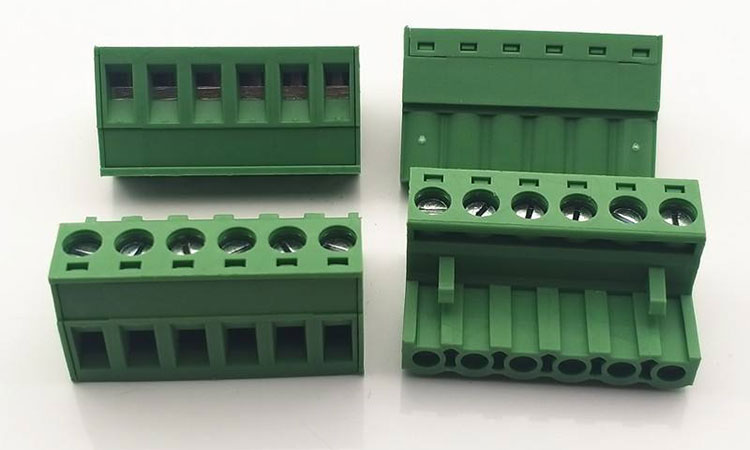
Ang terminal sa mga kable gigamit aron mapadali ang koneksyon sa mga alambre. Kini usa ka metal sheet nga gitakpan sa insulating plastic. Adunay mga buho sa duha ka tumoy aron isulod ang mga alambre, ug ang mga tornilyo gigamit alang sa pagtaod o pagtangtang. Pananglitan, duha ka wire usahay kinahanglan nga konektado ug usahay kinahanglan nga idiskonekta. Niining panahona, sila mahimong konektado sa mga terminal ug ma-disconnect bisan unsang orasa, Kini sayon ug paspas nga walay welding o winding kanila sa tingub.
Ang mga terminal sa kable angayan alang sa pagdugtong sa daghang mga alambre. Sa industriya sa kuryente, adunay mga espesyal nga terminal block ug mga kahon sa terminal, nga tanan mga wiring terminal, single-layer, double-layer, kasamtangan, boltahe, ordinaryo, mabuak, ug uban pa. Ang usa ka lugar nga crimping mao ang pagsiguro nga kasaligan nga kontak ug igo nga sulud.
Ang mga terminal sa mga kable mahimong bahinon sa, Mga serye sa terminal sa mga kable sa Europa, plug-in nga mga wiring terminal series, terminal sa mga kable sa transformer, pagtukod sa mga wiring terminal, serye sa terminal sa mga kable sa koral, spring wiring terminal serye, track wiring terminal serye, pinaagi sa kuta nga mga wiring terminal series, optoelectric coupling wiring terminal serye, 110 terminal, 205 terminal, 250 terminal, 187 terminal ug OD2 2 terminal sa singsing, terminal sa singsing, singsing nga terminal flag series terminal ug sheath series, lainlaing mga terminal sa singsing, tubular nga mga terminal, mga terminal sa kable, tumbaga nga gilis ug puthaw nga gilis, ug uban pa.
Ang mga materyales nga andamon alang sa paggamit sa mga wiring terminal naglakip terminal lugs, mga screwdriver, ug kawad.
1. Una, kuhaa ang insulasyon nga panit sa wire pinaagi sa 6-8 mm.
2. Dayon isulod ang nabutyag nga wire ngadto sa wiring terminal.
3. Dayon hugti ang ibabaw nga screw gamit ang screwdriver.
4. Ibira gamit ang imong kamot aron masiguro nga dili kini mahulog.
5. Dayon pindota ang switch ug tan-awa nga ang suga anaa aron ang mga wiring sa terminal makompleto.