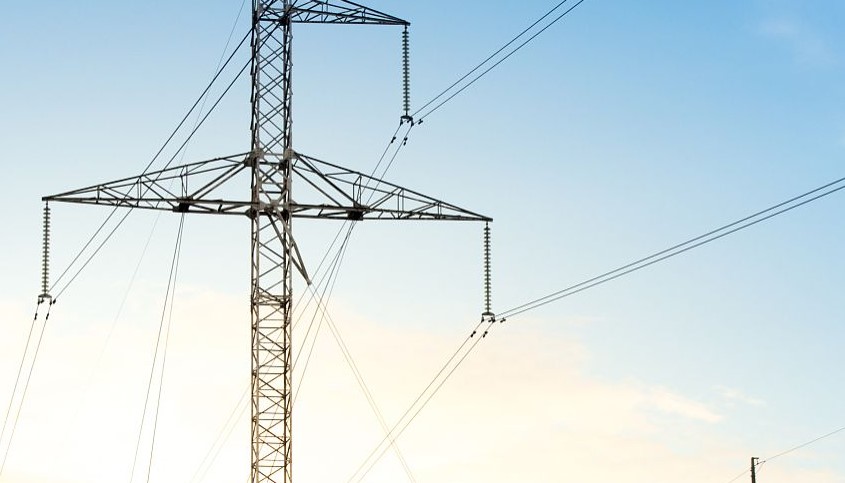
Les lignes aériennes sont soutenues par des sections de pylônes de transmission.
Des pylônes électriques sont utilisés pour les lignes à plus haute tension.
Et les poteaux en bois ou en béton sont généralement utilisés pour les lignes à faible tension..
En effet, les lignes à tension plus élevée (ligne de tension la plus élevée) doit être installé à une grande hauteur, car ils nécessitent une plus grande distance de sécurité.
Seuls les pylônes électriques peuvent permettre de transporter des lignes de plusieurs dizaines de tonnes.
Ce que vous voyez le long des routes en banlieue, ce sont généralement des tours de transmission..
Quant aux types de tours, il y a des tours à tête de chat, tours de verres à vin, tours en forme de porte, Tours en forme de V, etc.
Tension sur les lignes aériennes de transport
La tension nominale fait référence à la tension entre deux des trois phases ABC.
La tension domestique standard de 220 volts est la tension entre l'une des trois phases et la terre.
En réalité, la ligne qui transmet l'électricité à la maison est 380 volts.
Et les trois phases sont séparées avant d'entrer dans la maison.
Par exemple, chacune des trois phases ABC est reliée à chacune des unités d'un bâtiment.
Lignes aériennes au sol
Les lignes de transmission sont également divisées en courant continu et courant alternatif (CC et CA).
Un Le courant alternatif circule est composé des phases A, B et C.
Le sommet de la tour de transmission est la ligne de foudre, également appelé fil de terre aérien.
Les lignes situées dans des zones avec de nombreux orages ou haute tension disposent de deux lignes de foudre.
Les lignes avec moins d'orages ou de basse tension ne peuvent utiliser qu'une seule ligne de foudre..
Les lignes de foudre sont connectées aux poteaux pour diriger le courant de foudre vers le sol.
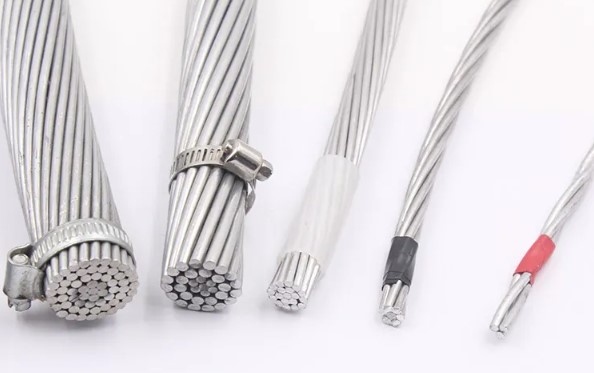
Lignes aériennes de transmission
Sous les lignes de foudre se trouvent les lignes de transmission.
Le nombre de fils est tous des multiples de 3. La ligne à circuit unique contient 3 fils, la ligne à deux circuits contient 6 fils, et la ligne à quatre circuits contient 12 fils.
Dans chaque circuit il y a trois fils pour chacune des trois phases A, B et C.
La raison pour laquelle il y a plusieurs circuits dans une tour est principalement due à la prise en compte de la capacité de transmission et de l'empreinte au sol.. C'est pourquoi les concepts de “longueur de ligne” et “longueur du circuit” ont également été développés.
Pour lignes à deux circuits, la longueur du circuit est le double de la longueur de la ligne et ainsi de suite.
En cas de niveaux de tension différents, la tension du conducteur supérieur est supérieure à celle du conducteur inférieur.
C'est parce que plus la tension est élevée, plus la distance de sécurité requise par rapport au sol est grande.
Les lignes de foudre se distinguent bien des lignes de transmission.
Le premier est directement au sommet de la tour, tandis que ce dernier doit être suspendu à la tour par des isolateurs.
S'il n'y a pas d'isolants, le conducteur est court-circuité directement à la tour.
L'isolateur est un accessoire pour les fils aériens (fils aériens) utilisé pour soutenir et sécuriser le conducteur.
Il peut garantir une distance et une isolation appropriées entre les conducteurs ou entre les conducteurs et la terre..
Les isolants doivent avoir une résistance d’isolation électrique et une résistance à l’humidité suffisantes.
Nous espérons que cet article vous aidera à bien comprendre les lignes aériennes et les pylônes électriques..
Nous fournissons une haute qualité et des prix bas de divers lignes aériennes et leurs accessoires.
Veuillez nous contacter si vous en avez besoin.