
SEBUAH kabel kontrol berpelindung Umumnya digunakan sebagai jalur sambungan instrumen listrik.
Sangat cocok untuk jalur sambungan instrumen listrik dengan tegangan AC 450/750V ke bawah dan jalur transmisi sistem kontrol otomatis.
Ia memiliki sifat yang sangat baik seperti tahan minyak, tahan air, ketahanan aus, ketahanan terhadap asam dan alkali, ketahanan terhadap berbagai gas korosif, resistensi penuaan, dan tidak mudah terbakar.
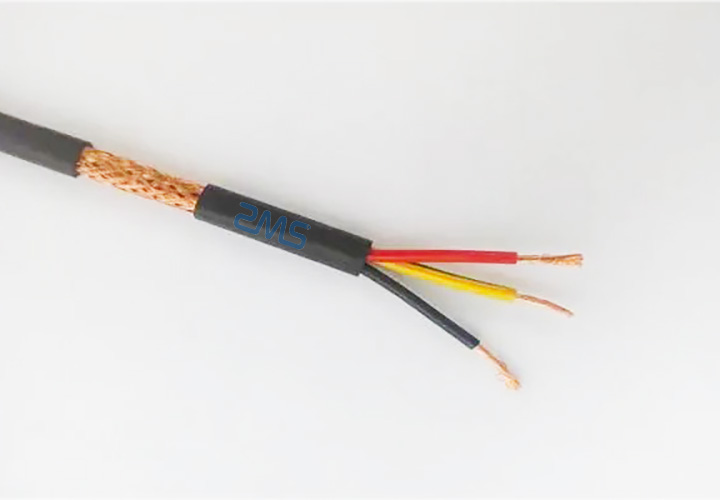
SEBUAH kabel kontrol berpelindung adalah kabel dengan lapisan jaring tembaga atau kawat logam yang dijalin di sekitar satu atau lebih kabel. Lapisan kawat logam mesh ini dapat mencegah sambaran petir dan sinyal eksternal tidak dapat mengganggunya.
Pelindung ini juga memberikan perlindungan terhadap kebocoran. Jika kabel rusak saat digunakan dan bocor, pelindung dapat mengarahkan arus bocor ke kabel ground, memberikan perlindungan keamanan.
Peran kabel pelindung dan grounding dari kabel kontrol berpelindung adalah bahwa lapisan pelindung dibagi menjadi pelindung internal dan pelindung eksternal..
Keduanya berfungsi untuk membuat kontak yang baik antara konduktor kabel dan lapisan insulasi, dan antara lapisan isolasi kabel dan lapisan pelindung bagian dalam, untuk menghilangkan peningkatan kuat medan listrik permukaan yang disebabkan oleh permukaan konduktor dan lapisan pelindung bagian dalam yang tidak mulus.
Karakteristik produk kabel kontrol berpelindung.
(1) Jari-jari lentur kabel yang diijinkan: radius lentur minimum dari kabel non-lapis baja adalah 6 kali bagian luarnya diameter dari kabel. Kabel berinsulasi dan berselubung fluoroplastik setidaknya harus 8 kali diameter luar kabel. Setidaknya harus ada kabel berpelindung pita tembaga atau kabel lapis baja pita baja 12 kali diameter luar kabel.
(2) Suhu pengoperasian maksimum: propilena politetrafluoroetilen (F46) isolasi tidak boleh melebihi 200 ℃. Polytetrafluoroethylene yang larut (PFA) isolasi tidak boleh melebihi 260 ℃.
(3) Suhu lingkungan minimum. Selubung PVC: peletakan tetap -40℃, peletakan tidak tetap -15℃. Selubung plastik fluor dan karet silikon: peletakan tetap -60℃, peletakan tidak tetap -20℃. Pemasangan kabel dan suhu peletakan tidak boleh lebih rendah dari 0℃ (fluoroplastik, karet silikon dan kabel berselubung nitril tidak boleh lebih rendah dari -25℃).