
Kabloyek voltaja bilind çi ye?
Veguheztina voltaja Ultra-bilind tê wateya karanîna 500 Astên voltaja kV-1000 kV ji bo veguhestina elektrîkê.
Ger ku 220 Indeksa veguheztina kV ye 100%, veberhênana nisbî per kîlometra veguheztina UHV, mesrefa nisbî her kîlovat-saetê veguheztina elektrîkê ya sed kîlometrî û xerckirina madeyên metal, etc., gelekî kêm bûne, û rêjeya bikaranîna korîdora xetê bi girîngî baştir bûye.
Di jiyana me ya rojane de, em pir caran dikarin projeya veguheztina voltaja ultra-bilind a serekî bibînin, gelo me li ser pirsê fikiriye: çima nikare bibe mîna kabloya bin erdê ya bajêr, xetên elektrîkê yên voltaja bilind hemî di binê erdê de hatine veşartin?
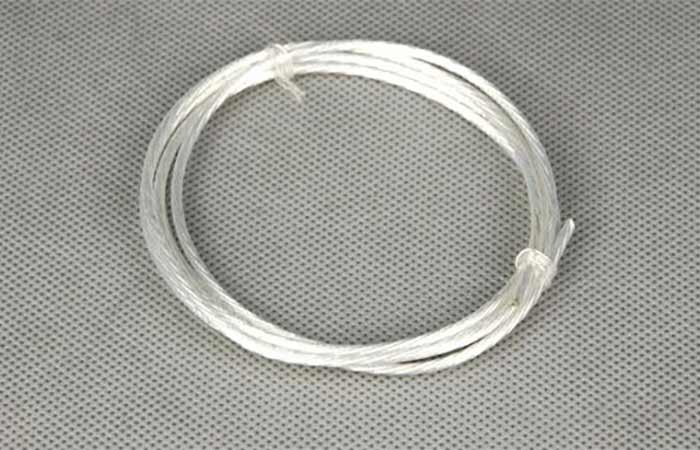
The current underground cables are generally of lower voltage levels.
The transmission of lines with high voltage levels is often overhead, which is mainly a factor of cost and technology.
Underground cables are more complex than the structure of overhead lines, with high technical requirements, manufacturing, and construction difficulties, coupled with the cable buried underground, it is not easy to find faults, overhaul, and maintenance are also more difficult.
And in terms of cost, generally, the same voltage level of the underground cable costs 3 ber 5 times higher than the overhead lines.
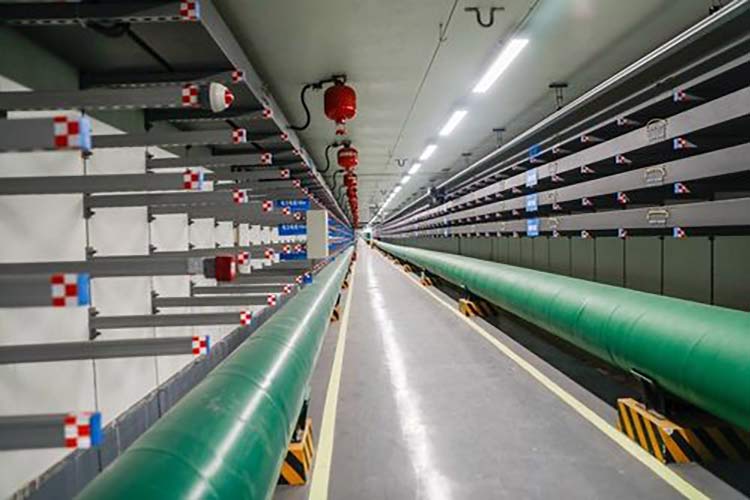
Characteristics Of High-Voltage Transmission Lines
In particular, our common high-voltage level lines are typically used for long-distance transmission.
If underground cables are used, especially for long-distance transmission regularly through complex terrain, the costs and technical requirements can even skyrocket.
Ji alîyek dî, also the kabloya jêrîn itself is inherently “hard”.
Overhead lines in the air in good thermal conditions, while the air around the underground cable does not flow, difficult to dissipate heat, which largely limits the level of power underground cables can transmit.
The important thing is that ultra-high voltage transmission has not been able to find an effective insulation material to do the outer skin insulation layer of the wire.
Ji ber vê yekê, ultra-high voltage wires are bare and cannot be buried buy underground.
There are distributed capacitances around the wires, through which the current can leak out.
On the one hand to increase consumption, ji alîyek dî, if any animal is closed, there will also be the risk of electrocution.
Air is an insulation, but the earth is a conductor. In overhead lines, it is enough to put the wire directly there.
But in the underground, add a layer of insulation shell outside the wire, wekî din, the electricity in the wire did not go far, and the leakage of electricity will leak all that is left.
Underground cables are more complex than the structure of overhead lines, with high technical requirements, manufacturing, and construction difficulties, coupled with the cable buried underground, not easy to find faults, overhaul, and maintenance are also more difficult.
Bi gelemperî dipeyivin, the cost of underground cables of the same voltage level will be several times or even tens of times that of aerial high-voltage lines.
Ultra-high voltage cables buried underground have both safety and economic problems.
If a fault occurs, its inspection and repair of the cable is a very large project and cannot afford to toss and turn.
Ji ber vê yekê, the current UHV cables should be hung high in the air.
Summary
Underground cable conductors outsourced insulation and protective layer manufacturing are very strict, the human body’s normal contact with the outer skin of the cable will not have any danger.
Cable laying is also very careful, the cable is mostly buried in a special cable trench, cable row pipe, or cable tunnel, subject to good safety isolation and protection.
The depth is mostly less than half a meter, and the higher the voltage level, the deeper the cable is buried.
Encamover, there will be a cable work well or a cable marker stake as a marker every few dozen meters on the ground where the cable is buried to remind people of safety.
Ji ber vê yekê, underground cables mainly do not cause danger to residents.