
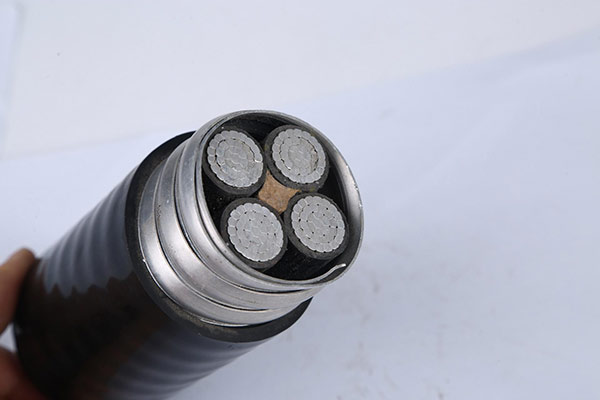
1. Nga kaupapa rereke
Taura mauri: Kei te whakauruhia e nga kaiwhakahaere o nga rauemi rereke i roto i te ringaringa whakarewa me nga taonga whakahiato, ka tukatukahia ki roto i te whakakotahitanga totoka.
Cable kore-armor: CABLES KI TE WHAKAMAHI KAUPAPA KAUPAPA, mai i te maha o nga waea ranei i ia roopu i ia roopu e rua nga taura hurihuri, ia huinga o nga waea ka tarai, he maha nga wa e karapoti ana i te pokapū. Ko te papa o waho he paparanga hipoki nui rawa atu.
2. Different uses
Taura mauri: Generally used in the case of ground, the cable trench is laid or buried in direct burial.
Cable kore-armor: Except for land burial, it is a non-armor cable.
3. The armored cable is wrapped in steel bands or steel wires to protect the cables from being damaged and damaged by external mechanical forces. You can also prevent mice and termites to bite so that the power transmission problem is not caused by the armor. Ko te curved radius of the armor is large, and the armor layer can be ground to protect the cable.
4. The external protective layer of the armored cable is wrapped in steel bands or steel wires to protect the cable from being damaged by external mechanical forces. Ko te cross-linked cable refers to the insulation layer outside the cable conductor is the use of cross-linked polyethylene materials. Armoring cables can be used, which can be used with cross-linking materials and the outer layer of the armor.
5. The method of representing armor cables is on ordinary cables+numbers. The first: “2” indicates double steel band armor; second: “2” means polyvinyl chloride cover, such as polyethylene sheath Change “2” ki “3”. Hei tauira, YJV represents ordinary cables and YJV22 represents armor cables.
6. Armor cables are generally about 12-15%higher than the price without armor. The cables have good external protection. Hei tauira, if the steel tube is protected, or placed in a very good operating environment, from the perspective of the engineering economy, ordinary cables can be used without armor.